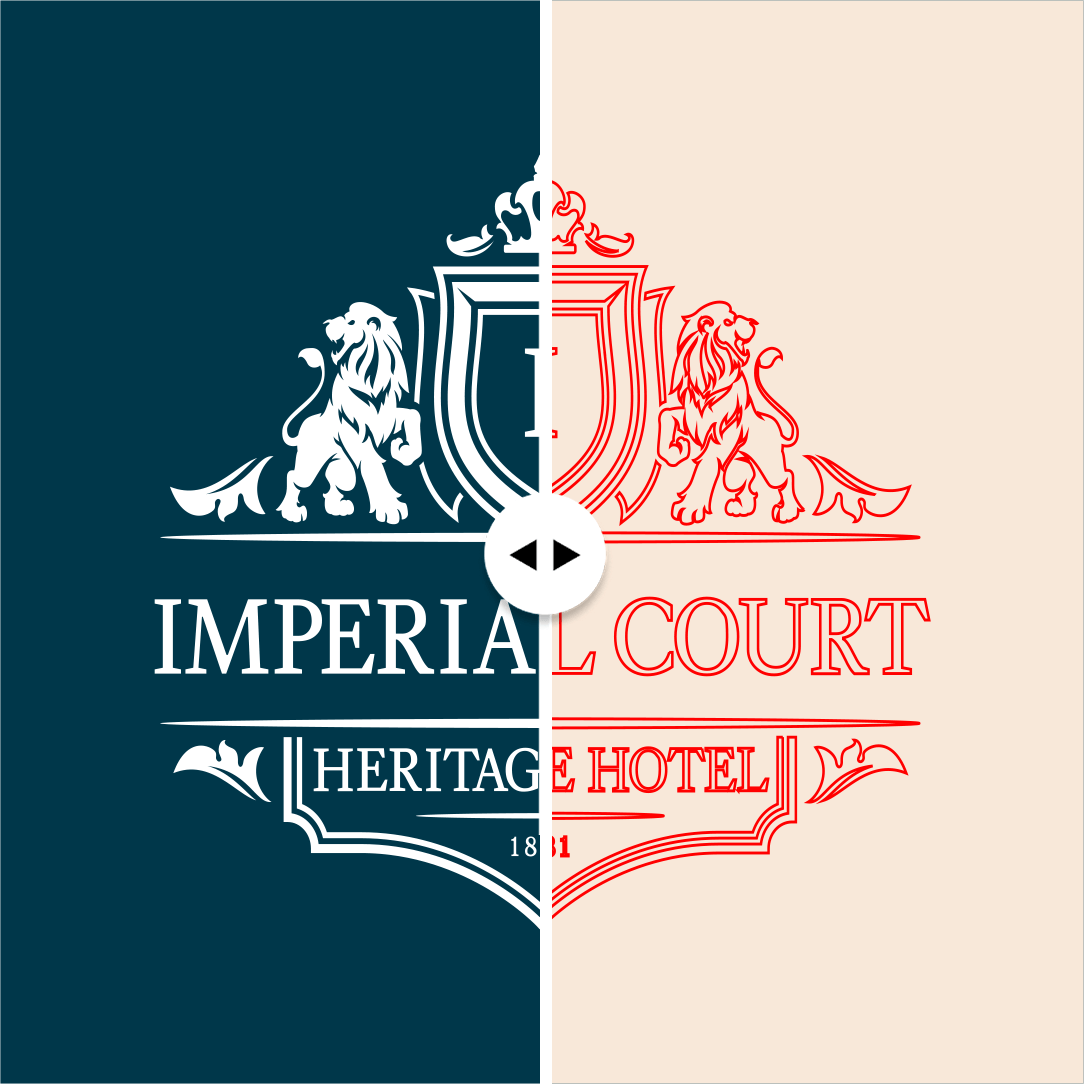
Image scaling for logos and icons is no longer constrained by pixel resolution thanks to AI vectorization. Vectorization tools now convert pixel-based PNG and JPG files into resolution-independent SVG that scales to any size without quality loss.
In 2026, methods range from neural-network approaches to commercial tools like Signazon AI logo Vectorizer that deliver print-ready SVG with automatic background removal and die-cut path optimization.
1. Introduction
Converting raster images—JPG, PNG, and similar pixel-based formats—into Scalable Vector Graphics (SVG) is a foundational step in professional design and print production. Vector files describe artwork through mathematical paths and Bézier curves rather than fixed pixel grids, enabling resolution-independent scaling, clean die-cutting, and precise color separation. For logos, icons, and synthetic geometric graphics, vectorization transforms a static bitmap into an editable, infinitely scalable asset.
Traditional tracing tools such as Adobe Illustrator’s Image Trace and the open-source Potrace library have served this function for years, relying on edge detection and polynomial curve fitting. However, these classical methods frequently struggle with anti-aliased edges, semi-transparent regions, and multi-color compositions—precisely the characteristics that define modern logo and icon artwork. Between 2024 and 2026, a new generation of AI-powered vectorization methods has matured from research prototypes into commercially deployed tools, dramatically accelerating the raster-to-SVG pipeline. This paper provides a concise overview of these methods and evaluates their impact on design-to-print productivity.
2. Technical Landscape (2024–2026)
2.1 Optimization-Based Methods
Optimization-based vectorization treats the problem as inverse rendering: given a target raster image, the system iteratively adjusts SVG path parameters to minimize a pixel-space reconstruction loss. This paradigm was enabled by DiffVG (Li et al., 2020), a differentiable rasterizer that allows gradients to flow from image-space metrics back to vector parameters. Building on this foundation, two methods published or widely adopted in 2024 stand out.
SuperSVG (Hu et al., CVPR 2024) decomposes the input into superpixels—locally homogeneous regions aligned with image boundaries—and vectorizes each independently via a two-stage neural architecture. A coarse-stage attention model predicts paths capturing the main structure, followed by a refinement stage that adds detail paths guided by the coarse output. A novel Diminishing Path Width loss prevents newly added paths from collapsing during refinement. This divide-and-conquer strategy achieves both high fidelity and practical efficiency, making SuperSVG especially effective for multi-color icons and geometric logos.
SVGDreamer (Xing et al., CVPR 2024) introduced Semantic-driven Image Vectorization (SIVE), which decomposes synthesis into foreground objects and background layers using attention-based primitive control. Its Vectorized Particle-based Score Distillation (VPSD) overcomes the over-smoothing and over-saturation issues of earlier Score Distillation Sampling approaches. While primarily a text-to-SVG system, SVGDreamer’s SIVE module produces editable, layer-separated vector output that aligns well with the needs of logo and icon design workflows.
2.2 Autoregressive and Language Model-Based Methods
A second paradigm treats SVG generation as a sequence prediction task. StarVector (Rodriguez et al., CVPR 2025) is a multimodal large language model that accepts raster images or text instructions and produces SVG code, trained on the large-scale SVG-Stack dataset. Its architecture unifies image vectorization, text-to-SVG generation, and diagram conversion within a single model, achieving state-of-the-art performance on icon and logo vectorization benchmarks.
OmniSVG (Yang et al., 2025) extends the autoregressive paradigm by harnessing native Vision-Language Models to parameterize SVG coordinates and commands as discrete tokens, decoupling structural logic from low-level geometry. This approach mitigates the “coordinate hallucination” problem common in code-based LLMs and can handle SVGs exceeding 30,000 tokens—far beyond the capacity of prior methods—enabling vectorization of complex, multi-element logo compositions.
SVGen (Wang et al., ACM MM 2025) applies chain-of-thought reasoning to SVG synthesis, training an end-to-end model on approximately 500,000 icons from Iconfont. By explicitly deriving design logic before generating geometric output through progressive curriculum learning and reinforcement learning optimization, SVGen produces semantically accurate vector icons with strong structural coherence.
2.3 Hybrid and Diffusion-Native Methods
VectorWeaver (Zhang et al., VISIGRAPP 2025) applies a Transformer-based diffusion process directly in vector graphics space, encoding SVG paths into learned embeddings and generating new vector graphics without raster intermediaries. This approach avoids the precision losses inherent in raster-to-vector pipelines and produces clean geometric output suited to icon and logo generation. The neural path representation work of Chen et al. (2024) similarly learns a dual-branch VAE that captures geometric properties from both sequence and image modalities, supporting a two-stage pipeline that first generates an initial SVG via Variational Score Distillation, then refines it through path simplification and layer-wise optimization.
3. Commercial Application Impact in Printing
The transition from research to commercial deployment has been particularly significant in the professional printing and signage industry, where vector artwork is a production requirement rather than a convenience. Signazon, a large-format printing company based in Plano, Texas, provides a representative case study of how AI vectorization is reshaping print production workflows (Signazon, 2026).
Signazon’s AI Logo Vectorizer is a browser-based tool that converts raster logos (PNG, JPG) into print production-ready SVG files specifically optimized for large-format printing and precision die-cutting. Unlike general-purpose online tracers that produce basic outlined shapes, Signazon’s system integrates decades of die-cutting expertise directly into the vectorization engine. The tool automatically solves edge cases and optimizes contours for automated cutting workflows before the file reaches production. Key capabilities include automatic background removal built into the conversion pipeline, real-time cut path visualization that shows users exactly how the file will be cut, and the generation of recolorable SVG output with clean, separated color paths for instant palette adaptation across different brand applications.
The productivity implications are substantial. Tasks that previously required a skilled designer spending hours in Adobe Illustrator—manually tracing a client-supplied JPEG logo, cleaning anchor points, removing backgrounds, and preparing cut paths—are now completed in seconds through automated AI vectorization. Signazon demonstrates this with examples such as a minimalist floral illustration with watercolor-like washes and script typography, vectorized from a web image and scaled to a 15-foot fabric SEG wall art display with every fine line and font detail preserved. The system converts typography into curves rather than characters, preserving decorative fonts, hand-drawn flourishes, and fine line details as visual shapes rather than attempting text recognition.
This commercial deployment illustrates several broader trends in the industry. First, AI vectorization is shifting from a file-conversion utility to an integrated step in automated manufacturing pipelines—the generated SVG feeds directly into cutting plotters, wide-format printers, and fabric print systems without manual intervention. Second, quality validation has moved from post-production inspection to real-time preview: users see the exact cut path at the moment of conversion, eliminating trial-and-error cycles that waste materials and production time. Third, the accessibility of professional-grade vectorization has expanded: businesses that previously outsourced vector artwork preparation or purchased expensive desktop software can now achieve production-ready results through browser-based tools with transparent per-file pricing.
4. Comparative Assessment
The methods surveyed in this overview differ across dimensions critical to practitioners selecting a PNG-to-SVG conversion tool. Optimization-based methods (SuperSVG, SVGDreamer) achieve the highest pixel-level fidelity by directly minimizing reconstruction losses, but require significant computation time—typically minutes per image. Autoregressive models (StarVector, OmniSVG, SVGen) produce structurally clean, well-organized SVG code in seconds but may sacrifice fine geometric detail on complex inputs. Diffusion-native methods (VectorWeaver) offer a promising middle ground, generating clean vector output without raster intermediaries, though they remain limited to relatively simple icon-class content.
Commercial tools such as the Signazon AI Vectorizer occupy a distinct niche: they optimize not only for visual fidelity but for downstream manufacturability—clean cut paths, separated color layers, and automatic background removal. This print-readiness dimension is absent from most academic benchmarks but is the decisive quality criterion for the signage, packaging, and promotional products industries. For practitioners evaluating a logo vectorizer, the choice thus depends on whether the primary output channel is screen display (where academic methods excel on perceptual metrics) or physical production (where commercial tools’ manufacturing-aware optimization delivers measurable time and material savings).
For images unsuitable for vectorization — photographs, gradients, complex textures — Signazon's AI Image Enhancer upscales resolution up to 4x, serving as the raster-side complement to the vector pipeline.
5. Conclusion and Outlook
AI-powered vectorization has matured rapidly between 2024 and 2026, moving from experimental research into tools that meaningfully increase design-to-print productivity. The convergence of differentiable rendering, vision-language models, and autoregressive sequence prediction has produced methods capable of converting raster logos and icons into editable, scalable SVG with unprecedented speed and quality. Commercially, the integration of AI vectorization into automated print production workflows—exemplified by Signazon’s production-ready vectorizer—demonstrates that the technology’s value extends well beyond file format conversion to encompass manufacturing optimization, quality assurance, and workflow automation.
Open challenges remain. Standardized evaluation benchmarks tailored to logo and icon vectorization—measuring not just perceptual similarity but editability, path efficiency, and production readiness—are needed to guide further progress. Generalization across the full diversity of logo styles, from minimalist wordmarks to detailed illustrative emblems, requires architectures that gracefully handle varying levels of visual complexity. As foundation models continue to scale, the integration of semantic understanding (recognizing that certain paths form a letter, a shape, or a decorative element) with geometric precision will define the next generation of AI logo vectorizers.