The vinyl decals production industry has undergone a revolutionary transformation, evolving from labor-intensive manual processes to sophisticated automated systems that achieve sub-millimeter precision with minimal human intervention.
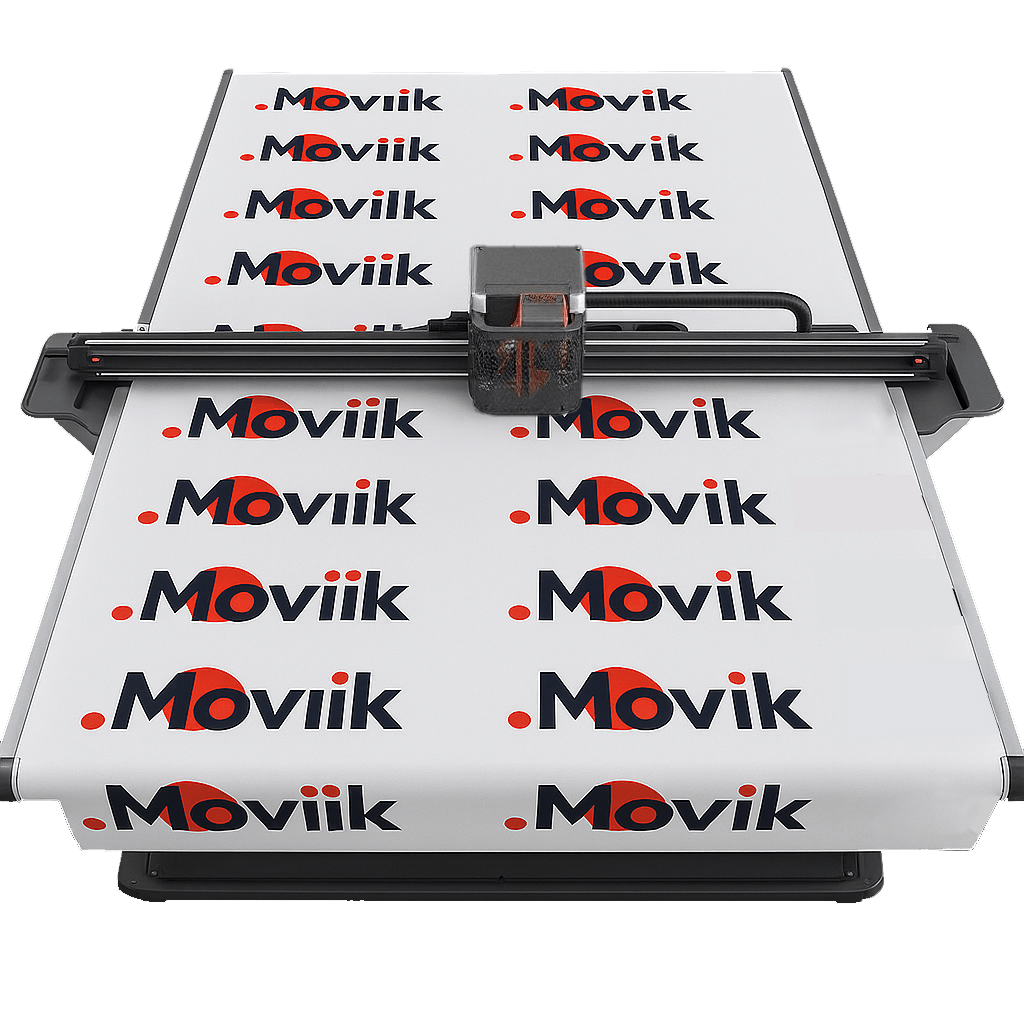
This technological leap represents more than just equipment upgrades—it's a fundamental shift in how the industry approaches quality, consistency, and scalability. The Kongsberg Ultimate 2025 model delivers precision results at unmatched cutting and throughput speeds: up to 2.7G acceleration and peak cutting speeds of over 165 m/min.
From Manual Process to Intelligent Automation
Early vinyl decal cutting systems required operators to manually interpret designs through Adobe Illustrator plug-ins, create equipment-specific cutting paths, and continuously manual intervention.
Quality consistency depended entirely on operator expertise, The limitations were significant:
- Making reproducibility nearly impossible across different shifts or operators.
- Each material change demanded individual calibration to adjust blade pressure for different material thicknesses.
- Horizontal blade movement only, vulnerability to cutting shifts during media advancement from improper calibration.
Modern cutting systems have eliminated these bottlenecks through automated path conversion from generic design files, standardized protocols, and multi-directional cutting capabilities. Advanced cutting solutions like Kongsberg and Zünd can process multiple materials simultaneously while maintaining consistent precision across extended production runs, fundamentally changing what's possible in high-quality window graphics and window decals for business manufacturing.
The Cut File Setup Revolution
The breakthrough came through standardized cut file setup specifications, or profiles, that communicate complete cutting instructions directly to automated systems. Instead of operator interpretation, these profiles embed comprehensive cutting parameters within design files using vector-based PDF formats. Each profile contains critical specifications including material type, cut tooling selection, speed settings, blade angle, and cutting depth—eliminating guesswork and ensuring consistent results across production runs.
This standardization enables remarkable automation capabilities. Systems can now accept virtually any properly formatted design file and convert outlines into executable cutting instructions automatically. Material profiles store optimal cutting parameters for different vinyl types and thicknesses, eliminating the need for manual recalibration between jobs. Perhaps most importantly, registration marks are now placed at sheet level rather than individual design level, dramatically reducing scanning time and increasing throughput. For high-demand applications like die cut truck decals, this speed and accuracy are essential for meeting tight production schedules."
Cutting-Edge Technology Performance
Modern industrial cutting systems represent a quantum leap in capability. The Kongsberg Ultimate cutting table exemplifies this evolution, every cut is s just as precise as the last, smooth, accurate, and dependable—performance levels that would have been impossible with traditional plotters.
These systems provide full XY-axis cutting capability without material dependency, enabling complex geometry and contour cutting in any direction while maintaining consistent accuracy. Vision systems and sensors automatically identify material types and adjust cutting parameters accordingly, while multiple tool positions support different operations without requiring production stops for tool changes.
The integration of an advanced tool head camera with innovative LED light options makes sure material edge and register marks are read without any effort. It read QR codes and registration marks to automatically pull up corresponding cut files and determine precise material positioning, eliminating manual file loading and positioning requirements while ensuring accurate cutting placement.
Transforming Production Economics
The transition to modern cutting technology has fundamentally altered the economics of decal production. Traditional systems created bottlenecks through required manual interventions, while modern platforms enable unattended operation with consistent quality regardless of production volume or operator skill level. Whether producing large vinyl decals or specialty vinyl stickers, the ability to switch between materials instantly without recalibration
has transformed how sign shops manage their production workflow.
Automated material profiling enables rapid job changeovers between different vinyl types and thicknesses without manual recalibration, while quality consistency is maintained through stored parameters rather than operator-dependent setup procedures.
Kiss Cutting: The Ultimate Precision Challenge
Modern cutting systems achieve remarkable precision through sophisticated blade pressure control, advanced mechanical systems, and real-time path correction algorithms.
Kiss cutting—the process of precisely slicing through vinyl's top layers while leaving the bottom paper liner untouched—the term "kiss" reflecting the blade's light, controlled contact. This technique is critical for professional decal production, enabling easy weeding of unwanted sections while preserving backing liner integrity for smooth installation. With vinyl ranging from 2 mil to 8 mil thickness, cutting quality directly determines finishing difficulty and final product success.
Traditional plotters failed at consistent kiss cutting due to uneven pressure application, creating cuts too shallow for weeding or too deep, penetrating the backing liner.
Kongsberg systems revolutionize this process with positioning accuracy of ±0.0078 inch and sophisticated pressure control algorithms that maintain perfect cutting depth across entire production runs. This precision ensures clean vinyl separation without backing damage, eliminating the waste and reprints that plagued traditional systems while delivering professional-grade results ready for application.
Real-Time Job Tracking via JDF Workflow
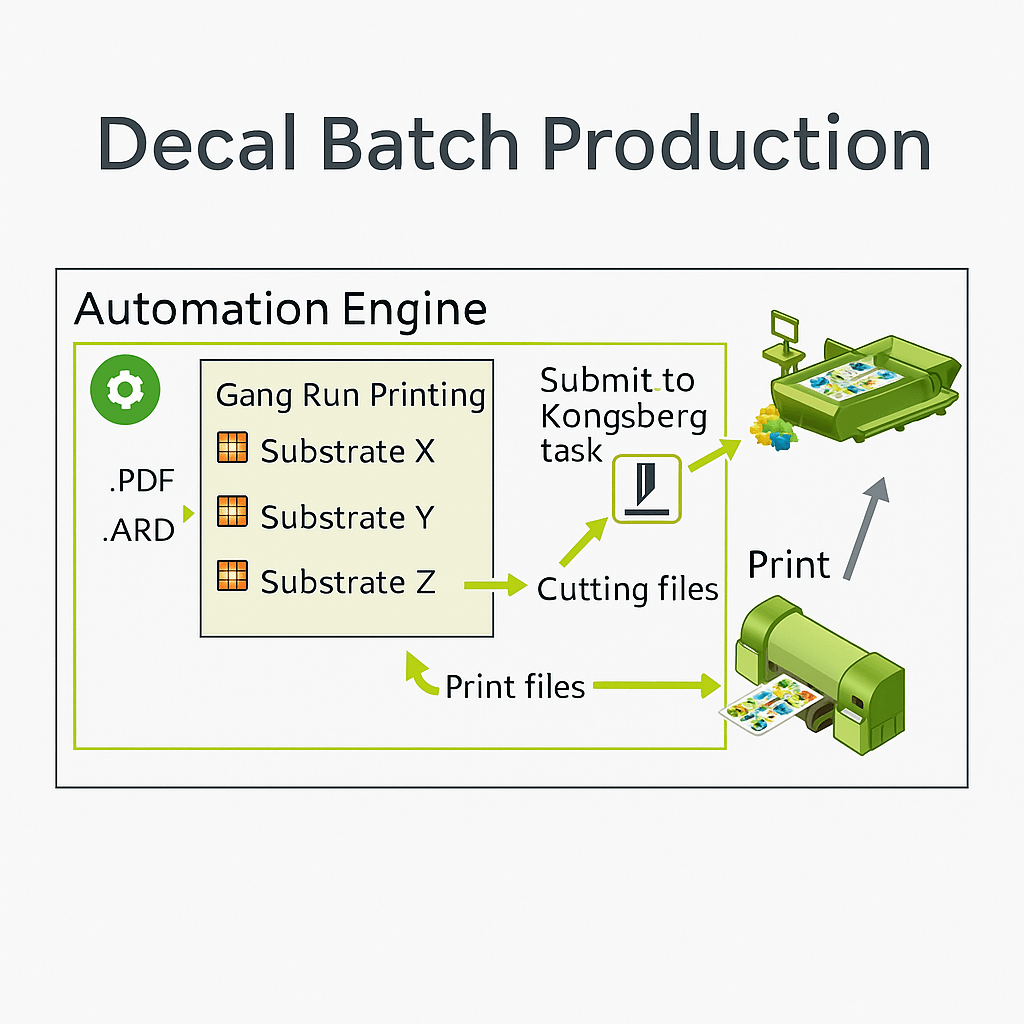
Contemporary cutting systems integrate seamlessly with digital printing workflows, enabling complete print-and-cut automation. Files can be processed from design through cutting with minimal manual intervention, supporting new business models where online companies can accept files globally and deliver consistent quality regardless of design complexity.
Advanced systems like Kongsberg support JDF (Job Definition Format) workflow integration, providing full data transparency throughout the production process. This enables real-time tracking from the moment a job enters the queue, through cutting initiation, to completion status. Job status updates occur instantly, allowing for precise production scheduling and customer communication without manual intervention.
This integration has democratized access to professional-quality decal production, enabling smaller operations to compete effectively in markets previously dominated by large manufacturers. The standardization of protocols means that a design created anywhere in the world can be executed with identical precision at any properly equipped facility.
The Future of Intelligent Manufacturing
The evolution continues with emerging technologies promising even greater precision and efficiency. AI applications in cutting path optimization reduce waste while improving speed, while machine learning analyzes performance data to predict maintenance needs and optimize parameters for new materials.
The journey from manual plotters to intelligent automation demonstrates how systematic technological advancement can revolutionize entire industries, establishing new benchmarks for quality, consistency, and efficiency that extend far beyond decal production into multiple manufacturing sectors.