Introduction
As the signage industry evolves, sustainability has become a central concern—and digital textile printing is leading the way toward greener solutions.
Traditional signage materials, particularly PVC-based vinyl banners, carry a heavy environmental footprint. PVC enters the environment as microplastics, and its production and disposal can release harmful chemicals. Most used vinyl banners end up in landfills, where they persist for decades without biodegrading. In contrast, fabric banners offer a sustainable alternative with biodegradable properties.
Recent developments in digital textile printing demonstrate how the technology aligns with sustainability goals through biodegradable materials, eco-friendly inks, and energy-efficient display systems.

Understanding Biodegradable Fabric Technology
Biodegradable synthetic fabrics represent a breakthrough in sustainable materials. These enhanced polyester and nylon textiles incorporate a patented additive introduced during melt extrusion at the beginning of the fiber-making process. This additive creates numerous biodegradable "hot spots" within the plastic's molecular structure, allowing naturally occurring microbes to break down the material similarly to natural fibers.
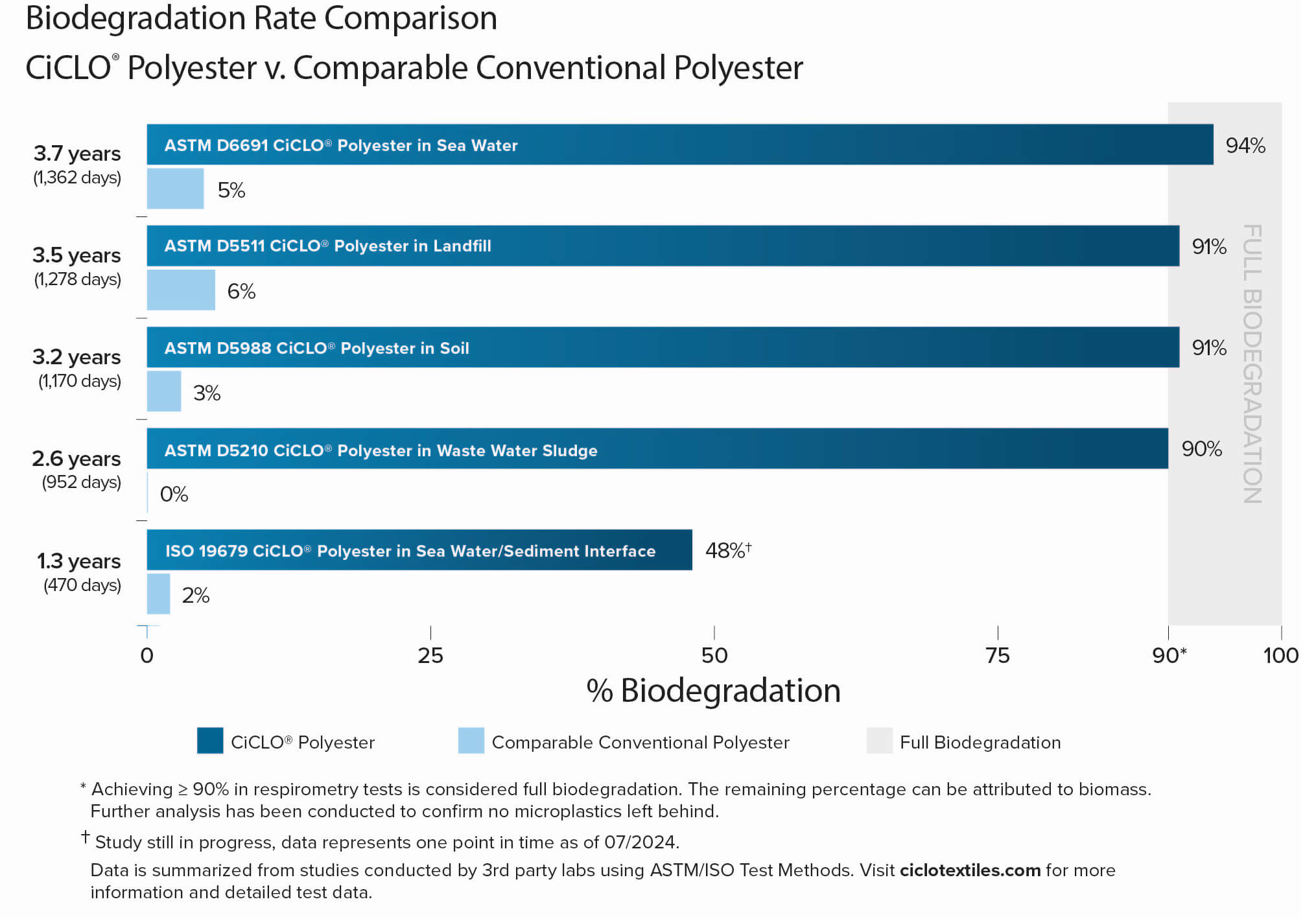
Testing conducted by the University of California, Santa Barbara's Bren School of Environmental Science & Management, using internationally recognized ASTM respirometry methods, demonstrated remarkable results:
- ASTM D5988 (soil simulation): After 1,170 days, biodegradable polyester achieved 91% biodegradation.
- ASTM D6691-17 (natural seawater): After 1,362 days, biodegradable polyester achieved 94% biodegradation.
Achieving 90% or higher in these standardized tests indicates complete biodegradation, proving that enhanced synthetic materials can return to nature far more effectively than traditional polyester.
Eco-Conscious Printing: Dye Sublimation Advantages
Many of the inks used in direct-to-fabric or heat transfer printing, are water-based, pigment inks, recyclable, and eco-certified. They are free from the harsh solvents found in older print methods, such as UV or solvent inks—significantly reducing emissions of volatile organic compounds (VOCs).
These properties make dye-sub an ideal match for sustainable fabrics, combining high color quality with minimal environmental impact.
Energy-Efficient Illumination: SEG LED Technology
Energy efficiency represents another crucial factor in sustainable signage solutions. Large SEG (Silicone Edge Graphic) lightboxes utilize LED backlighting technology, consuming significantly less electricity than traditional fluorescent or neon lighting systems. Over a display's operational lifespan, LEDs require substantially less energy while delivering equivalent brightness levels. Additionally, their extended lifespan reduces waste and the need for frequent replacement components.
These advanced lightbox systems provide brilliant, evenly distributed illumination with a fraction of the environmental cost associated with conventional lighting solutions.
This comprehensive approach addresses environmental concerns throughout the entire product lifecycle—from sustainable production methods to end-of-life biodegradation—helping reduce plastic waste and protect environmental resources for future generations.
Conclusion
Digital textile printing technology continues to evolve, offering businesses an opportunity to meet their visual communication needs while supporting environmental sustainability goals. Through biodegradable materials, eco-friendly inks, and energy-efficient display systems, fabric-based signage solutions represent the future of responsible printing practices.